- Who it’s for
- Adults with a skin growth, cyst, changing mole or painful external hemorrhoid
- Numbing
- Local numbing medicine is used for most procedures
- Visit length
- Varies — ask when booking
- Tell us first
- If you take blood thinners, have allergies, or are or might be pregnant
- Insurance
- Most visits billed to insurance — call to confirm coverage for your procedure
In-office procedures
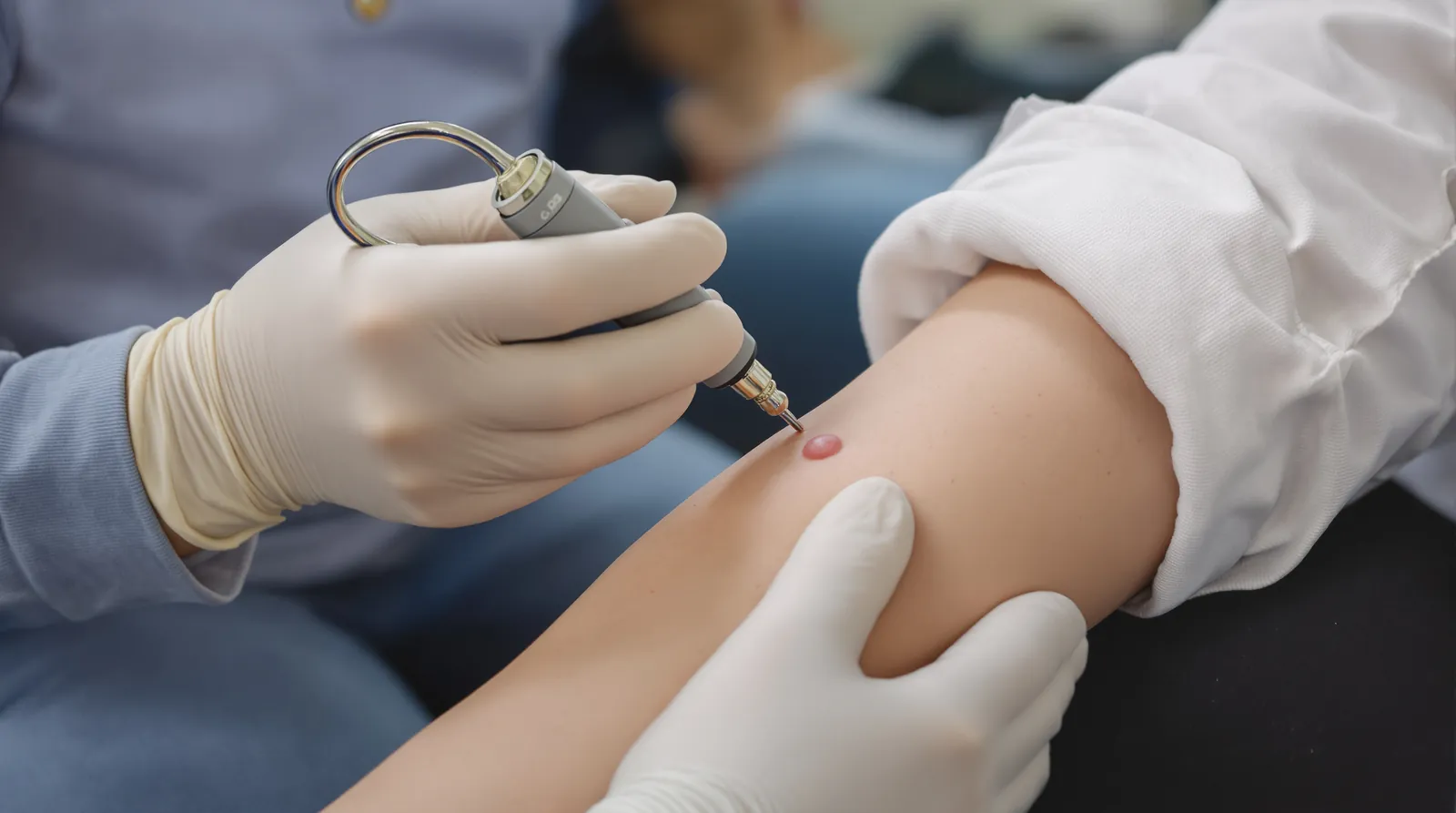
- Skin biopsy: removing a small sample, or all, of a spot so a lab can examine it under a microscope.
- Mole excision: removing a mole that is changing, irritated or suspicious, sometimes closed with stitches.
- Cyst removal: removing a cyst that is large, tender or bothersome.
- Lesion destruction: treating warts and certain noncancerous growths without cutting them out, using methods such as freezing (cryotherapy).
- Thrombosed external hemorrhoid care: removing a painful blood clot from an external hemorrhoid under local anesthesia, when appropriate.
If you’d like a mole, wart or skin tag removed for appearance, see mole, wart and skin tag removal in our aesthetics practice.
When a mole or spot should be checked
Moles are very common, but a mole that looks unusual or changes should be checked, and a biopsy lets a lab see whether a spot is skin cancer. The American Academy of Dermatology’s ABCDEs describe warning signs:
- A, Asymmetry: one half of the spot is unlike the other half.
- B, Border: an irregular, scalloped or poorly defined edge.
- C, Color: colors that vary, such as tan, brown or black, or areas of white, red or blue.
- D, Diameter: melanomas are usually larger than 6 millimeters (about 1/4 inch) when found, but they can be smaller.
- E, Evolving: a spot that looks different from the others or is changing in size, shape or color.
Also point out any spot that is new, itching or bleeding. Depending on what he finds, Dr. Shin may recommend a biopsy in the office or refer you to a dermatologist.
Painful thrombosed external hemorrhoids
When a blood clot forms in an external hemorrhoid, it can be very painful and feel like a hard, tender lump near the anus. According to a review in American Family Physician, removing the clot within the first two to three days of symptoms leads to quicker relief and a lower chance of it coming back, so call promptly.
For other hemorrhoid procedures, we refer you to a colorectal surgeon, and for a colonoscopy, to a gastroenterology specialist. If you have rectal bleeding, see a doctor so more serious causes can be checked.
What to expect
Exam
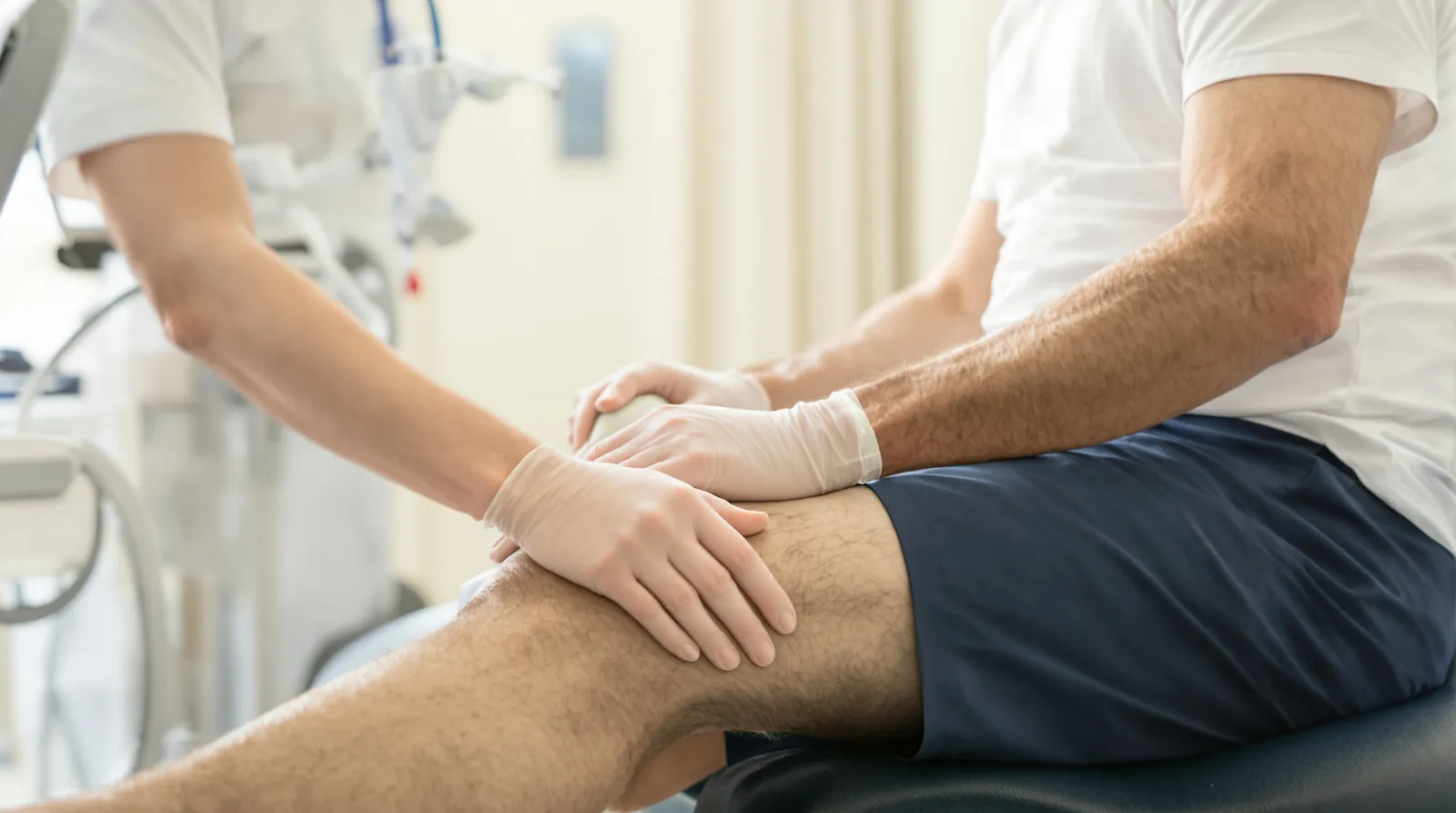
Dr. Shin examines the area, explains your options and risks, and answers your questions.
Numbing
The area is cleaned and numbed with local anesthetic.
Procedure
The sample, growth, cyst or clot is removed or treated. Tissue is usually sent to a lab.
Aftercare
You go home with a bandage and care instructions. Stitches, if used, usually come out in about 3 to 14 days.
Caring for the area afterward
- If you have stitches, keep the area covered for the first 24 to 48 hours, then gently wash with soap and water and pat dry.
- Keep the area clean and dry, and limit hard activity that could reopen the wound.
- After freezing treatment, a blister and scab are common. The scab usually falls off on its own in 1 to 3 weeks, so don’t pick it.
- Ask before taking aspirin or ibuprofen, which can increase bleeding.
Common questions
Does a biopsy mean I have cancer?
No. A biopsy is a test to find out what a spot is. The sample is examined under a microscope. If the spot isn’t cancer, you may not need any more treatment. If the result shows something that needs care, Dr. Shin will explain your options and next steps.
How long do skin biopsy results take?
MedlinePlus notes that skin biopsy results most often come back in a few days to a week or more. Timing depends on the lab and the tests needed. Ask us how you’ll receive your results, and call if you haven’t heard back when expected.
Will removing a mole or cyst leave a scar?
Any procedure that cuts into the skin can leave a scar. Other possible risks include bleeding, infection, changes in skin color, slow healing and the growth coming back. Caring for the wound as instructed, and keeping it clean and dry, can help it heal and reduce scarring.
What should I do if I think I have a thrombosed hemorrhoid?
Call soon. A thrombosed external hemorrhoid is usually a very painful, hard lump near the anus. According to American Family Physician, removal within the first two to three days of symptoms leads to quicker relief. If you have heavy rectal bleeding or feel faint, get emergency care.
Do warts need to be treated?
Not always. Warts often go away on their own, though it can take months or years. Treatment may help if a wart bothers you or keeps spreading. Talk with Dr. Shin before treating a wart on your face, and have genital warts treated by a doctor rather than with home remedies.
Important information
- Not every growth should be treated in the office. After an exam, Dr. Shin will explain whether a procedure here, a specialist referral or simply watching the spot makes sense.
- Call us right away for increasing redness or pain, yellow or green pus, a fever over 100°F, or bleeding that doesn’t stop after 10 minutes of direct pressure. For heavy bleeding, call 911 or go to the nearest emergency room.
Sources & further reading
- What to look for: ABCDEs of melanoma (opens in a new tab) — American Academy of Dermatology
- Moles (opens in a new tab) — MedlinePlus, U.S. National Library of Medicine
- Skin lesion biopsy (opens in a new tab) — MedlinePlus, U.S. National Library of Medicine
- Skin lesion removal (opens in a new tab) — MedlinePlus, U.S. National Library of Medicine
- Skin lesion removal - aftercare (opens in a new tab) — MedlinePlus, U.S. National Library of Medicine
- Hemorrhoids: Diagnosis and Treatment Options (2018) (opens in a new tab) — American Family Physician, American Academy of Family Physicians
- Hemorrhoids (opens in a new tab) — MedlinePlus, U.S. National Library of Medicine
- Epidermoid cyst (opens in a new tab) — MedlinePlus, U.S. National Library of Medicine
- Warts and Wart Removal (opens in a new tab) — American Academy of Family Physicians (familydoctor.org)
- When to use the emergency room - adult (opens in a new tab) — MedlinePlus, U.S. National Library of Medicine
Last updated October 2026. This page is educational and does not replace a visit with a clinician.