- Helps with
- Sun spots, freckles and redness from small visible blood vessels
- Session
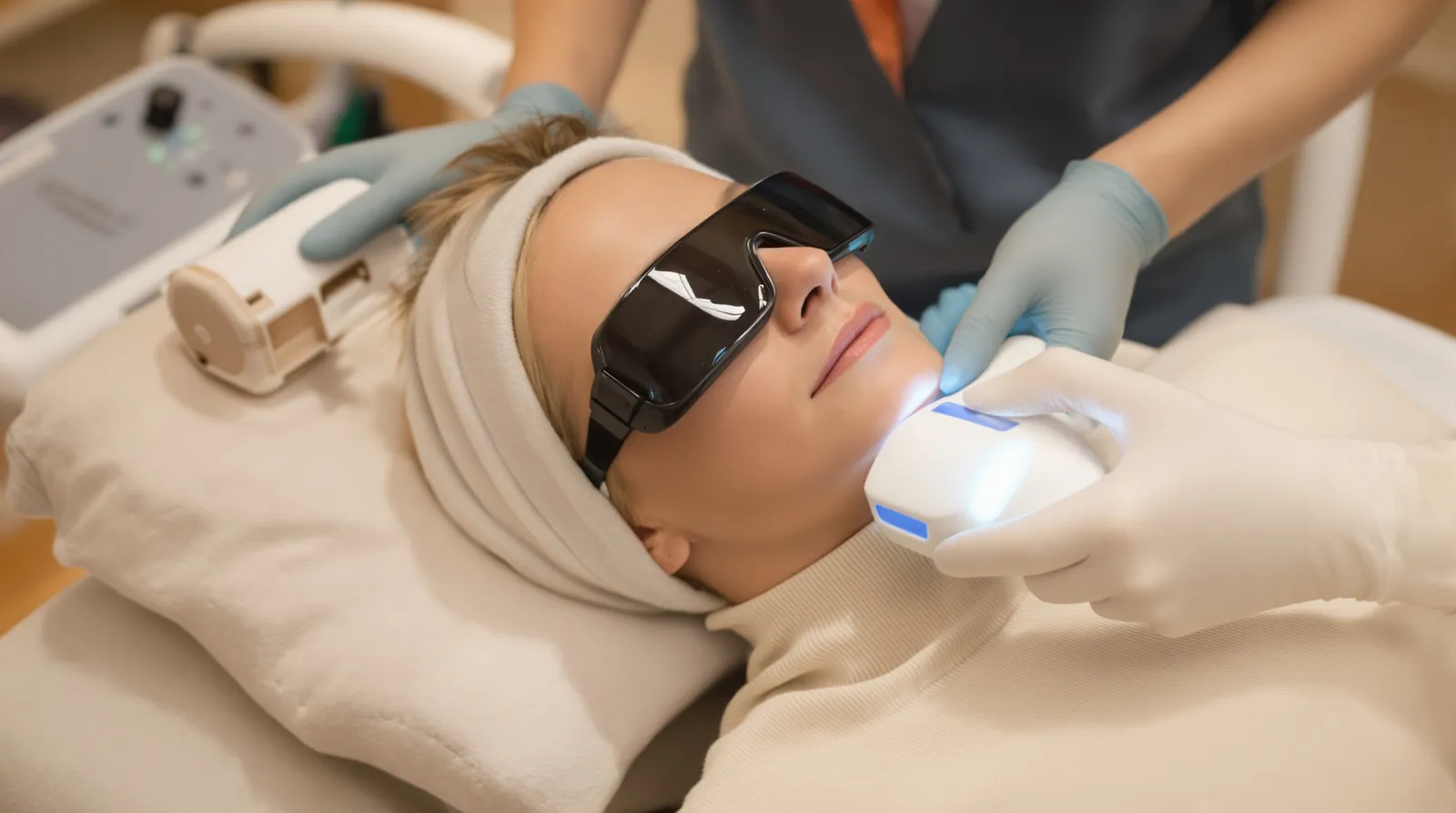
- Flashes of filtered light; everyone in the room wears eye protection
- Typical course
- Studies of sun-damaged skin used 3 to 7 sessions, about 4 on average
- Downtime
- Most people return to normal activities the same day; some spots may crust
What is IPL?
IPL stands for intense pulsed light, and it is not a laser. Instead of one wavelength, it sends quick flashes of filtered light across a broad range, about 530 to 1,100 nm for the A-Tone IPL. Brown pigment and the red color of blood in tiny vessels absorb the light, and treated spots and vessels fade over time.
Different lights, different targets
- Pigment & vessels
- Hair & deeper pigment
- Water — resurfacing
- 532 nm (KTP / Nd:YAG) — hemoglobin in small vessels and surface pigment
- 530–1100 nm (IPL, filtered broadband light) — sun spots and redness
- 755 nm (alexandrite) — melanin in hair follicles
- 1064 nm (Nd:YAG, including picosecond) — deeper pigment, dark tattoo ink, hair in darker skin
- 2940 nm (erbium) and 10,600 nm (CO₂) — water in skin, for resurfacing
What IPL may help
The A-Tone IPL System is cleared for three kinds of treatment:
- Benign pigmented lesions, such as sun spots, age spots and freckles.
- Benign vascular lesions, such as redness from small visible blood vessels. See redness, rosacea and visible veins.
- Hair reduction. See laser hair removal.
In a systematic review of IPL for sun-damaged skin, people had 3 to 7 sessions, about 4 on average, and most studies reported improvement in sun spots, redness and visible vessels. Many of the studies were small or of low quality. For facial redness, the American Academy of Dermatology (AAD) says light and laser sessions are usually spaced 3 to 4 weeks apart. Results vary.
Spots are examined first
Some spots that look like age spots are actinic keratoses, which are precancers, and a new or changing spot can be skin cancer. Dr. Shin examines spots before treatment, and anything suspicious is biopsied before any light or laser treatment. Learn about skin biopsies.
What to expect at our Torrance office
Consultation
We review your skin type, recent sun exposure, medicines and health history, and examine the spots or redness to be treated.
Eye protection
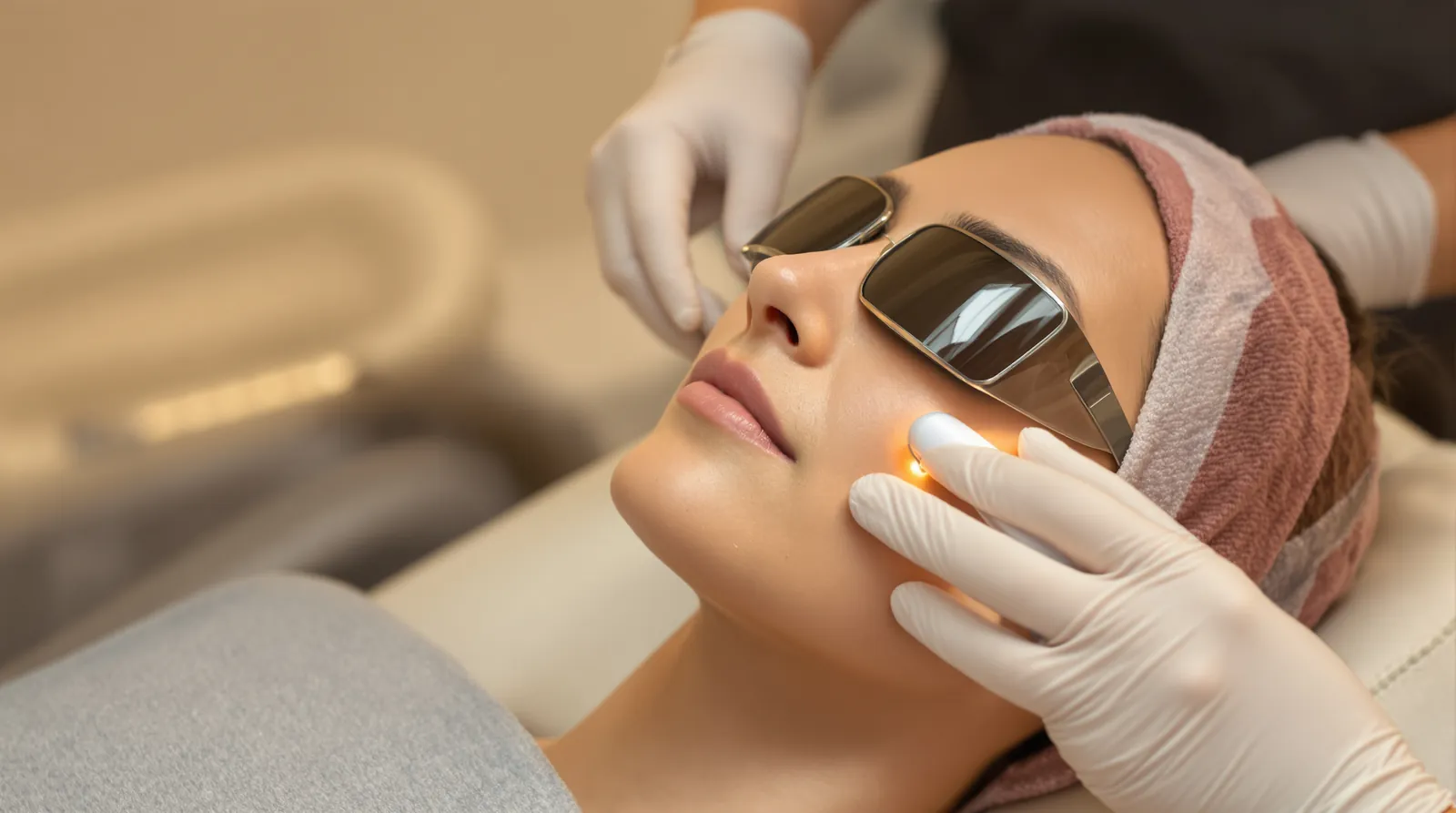
Your eyes are covered with protective goggles or shields, and everyone in the room wears eye protection.
Treatment
A smooth handpiece is placed on the skin and flashes of light are delivered. Tell your provider if it feels too hot or painful.
Aftercare
Redness or swelling can occur, and some treated spots may crust. Avoid tanning and use SPF 30+ sunscreen every day.
Side effects & risks
- Redness, swelling, crusting and blisters.
- Darker or lighter spots. Scarring is rare.
- Burns and dark marks, which are more likely on darker or tanned skin.
- Eye injury without proper eye protection.
- Darkening of melasma.
Who should not have it, or should talk to Dr. Shin first
- You have a tan or recent sun exposure, or a darker skin tone.
- You are pregnant. A review advises delaying elective cosmetic procedures until after the baby is born.
- You take, or recently took, isotretinoin, or a medicine that makes your skin sensitive to light.
- You get cold sores.
- You have melasma, which light can darken.
- You have a new or changing spot.
- Your child has a birthmark, such as a port-wine stain or hemangioma. Birthmarks in children should be checked by a specialist.
Treatment may be performed by Dr. Shin or by a licensed registered nurse or physician assistant under his supervision.
Common questions
Is IPL the same as a laser?
No. A laser produces light of a single wavelength, while IPL sends flashes of filtered light across a broad range of wavelengths. That broad light is absorbed by both brown pigment and small blood vessels, which is why IPL is used for sun spots and redness. Both need eye protection and settings matched to your skin.
How many IPL sessions will I need?
It depends on what is being treated. In a systematic review of IPL for sun-damaged skin, people had 3 to 7 sessions, about 4 on average. For facial redness and visible blood vessels, the AAD says light and laser sessions are usually spaced 3 to 4 weeks apart. Your plan is based on your exam, and results vary.
What does skin look like after IPL?
Most people go back to normal activities the same day. Redness or swelling can happen, and some treated brown spots may crust as they heal. Let crusts come off on their own, stay out of the sun and use a broad-spectrum SPF 30+ sunscreen every day. Call us if you notice blisters or a burn.
Can IPL be used on darker skin tones?
Sometimes, with caution. The AAD notes that darker skin is more prone to burns and dark marks after laser and light treatments, and a tan raises the same concern. The studies in a systematic review of IPL for sun-damaged skin included only skin types I to IV. Your skin type is assessed first, and a different option may be suggested.
Does IPL help rosacea?
IPL can reduce redness from small visible blood vessels, a common sign of rosacea. The AAD says laser and light treatments usually reduce visible blood vessels more than they reduce overall redness. Rosacea is long-term and new vessels can form, so treatment is part of a broader plan. See redness, rosacea and visible veins.
Important information
- The A-Tone IPL System is FDA-cleared (K131712) for benign pigmented lesions, benign vascular lesions and permanent hair reduction. Using IPL for melasma, acne or “toning” is off-label. Dr. Shin will review the evidence, risks and alternatives with you.
- Melasma and other off-label uses: IPL is sometimes used for melasma, acne or “toning,” but these are off-label uses. Light treatments can cause new dark patches in melasma, and melasma often returns. If you have melasma, see melasma care for the usual first steps.
Sources & further reading
- 510(k) K131712: A-Tone IPL System (opens in a new tab) — U.S. Food & Drug Administration
- Skin conditions that lasers can treat (opens in a new tab) — American Academy of Dermatology
- Intense pulsed light on skin rejuvenation: a systematic review (Sales et al., 2021) (opens in a new tab) — Archives of Dermatological Research, via PubMed
- Lasers and lights: How well do they treat rosacea? (opens in a new tab) — American Academy of Dermatology
- A review of laser and light therapy in melasma (Trivedi et al., 2017) (opens in a new tab) — International Journal of Women’s Dermatology, via PubMed
- The role of lasers and intense pulsed light technology in dermatology (Husain & Alster, 2016) (opens in a new tab) — Clinical, Cosmetic and Investigational Dermatology, via PubMed
- Ocular injury in cosmetic laser treatments of the face (Huang et al., 2018) (opens in a new tab) — Journal of Clinical and Aesthetic Dermatology, via PubMed
- Actinic keratosis: Overview (opens in a new tab) — American Academy of Dermatology
- Laser hair removal: Be prepared with these facts (opens in a new tab) — American Academy of Dermatology
- Safety of cosmetic dermatologic procedures during pregnancy (Lee et al., 2013) (opens in a new tab) — Dermatologic Surgery, via PubMed
- Isotretinoin and timing of procedural interventions: consensus recommendations (Spring et al., 2017) (opens in a new tab) — JAMA Dermatology, via PubMed
- Clinical practice guideline for the management of infantile hemangiomas (Krowchuk et al., 2019) (opens in a new tab) — American Academy of Pediatrics, Pediatrics
- Rosacea: symptoms, causes and risk factors (opens in a new tab) — National Institute of Arthritis and Musculoskeletal and Skin Diseases (NIH)
Last updated October 2026. This page is educational and does not replace a visit with a clinician.