- Helps with
- Melasma and other brown patches, once an exam confirms what they are
- Session
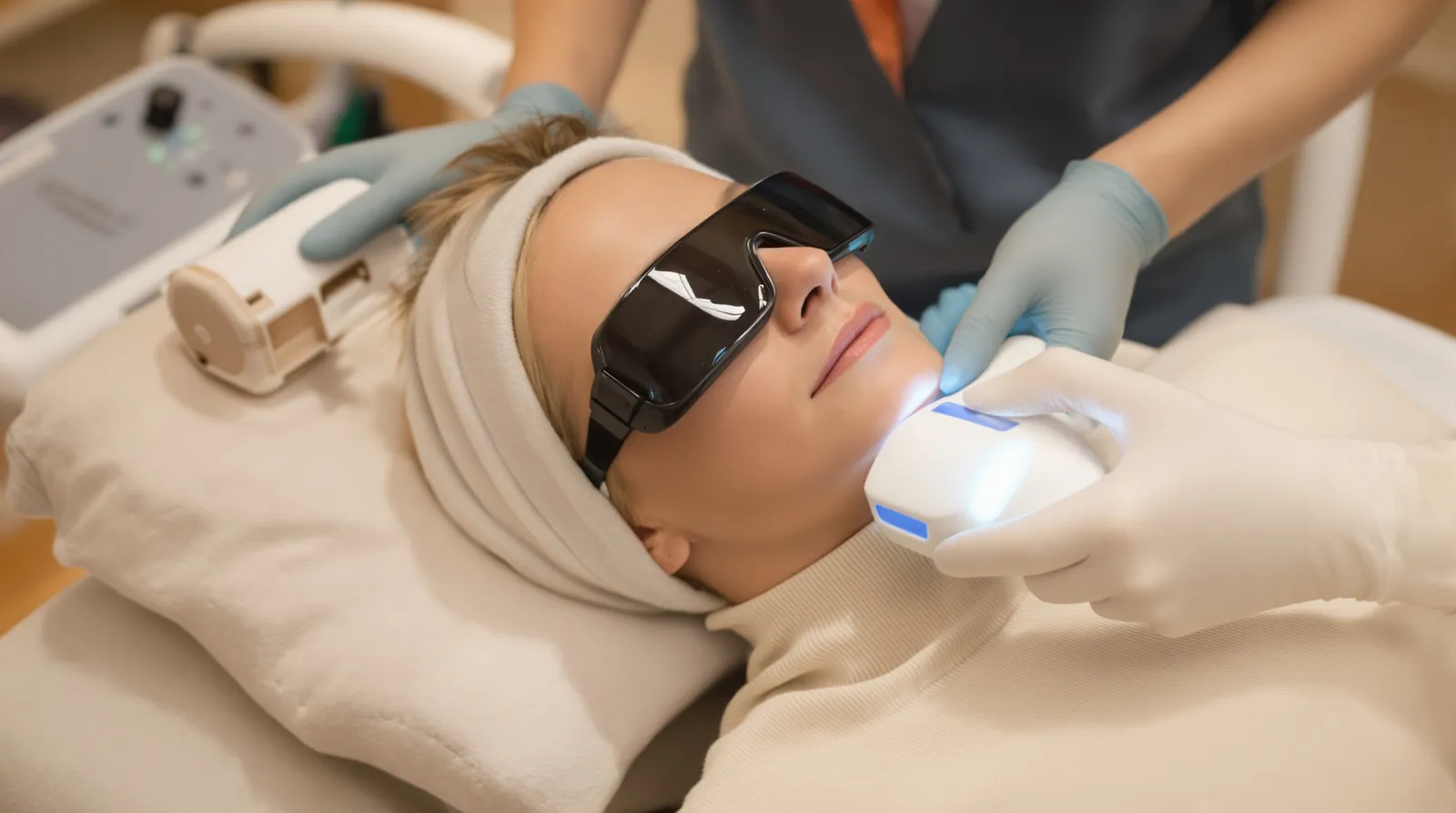
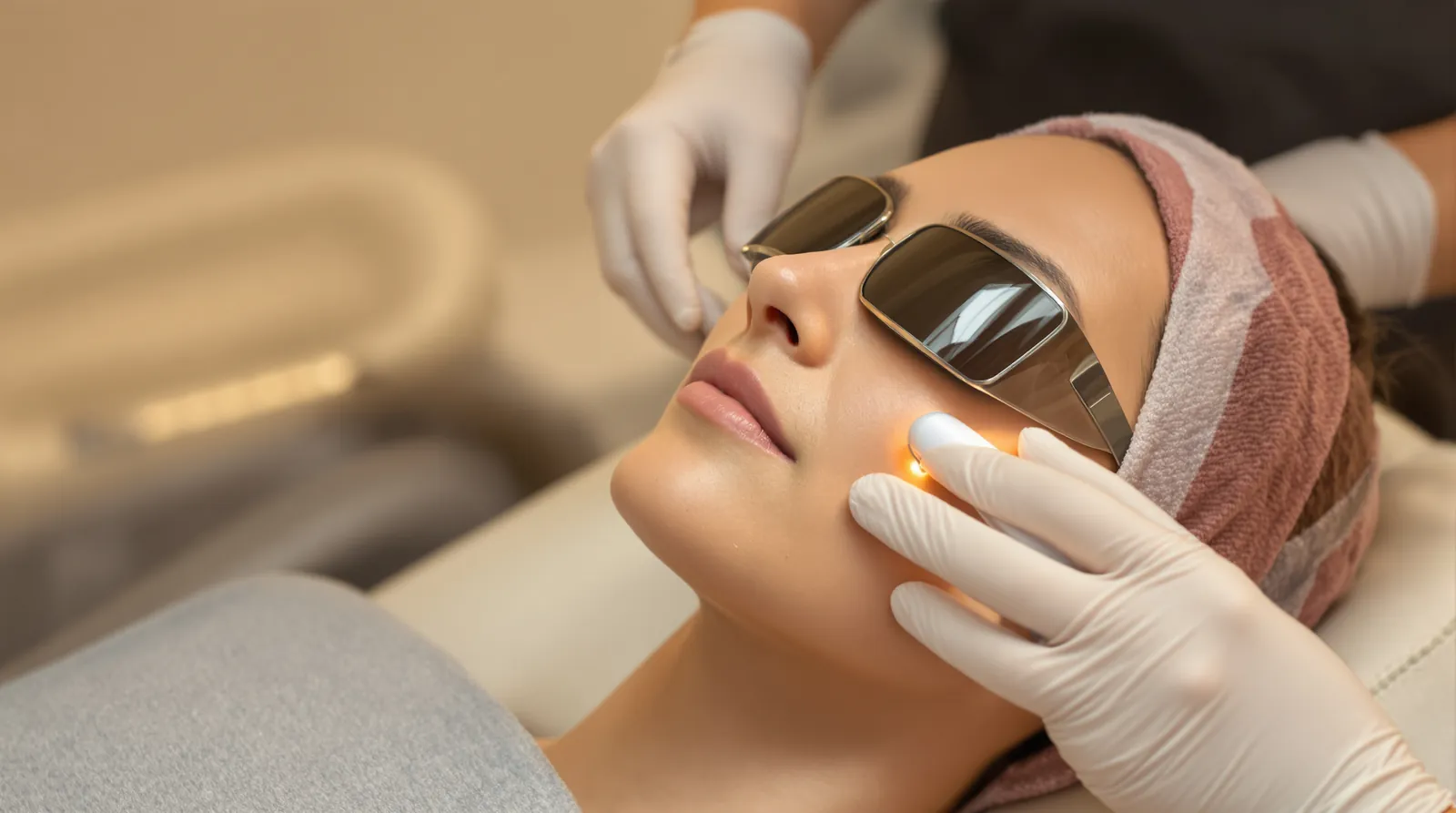
- Low-energy laser passes over the skin, with eye protection for everyone
- Typical course
- Toning studies used about 5 to 15 sessions, 1 to 2 weeks apart
- Downtime
- Most people return to their day right away; mild redness can occur
What melasma is, and why it comes back
The American Academy of Dermatology (AAD) describes melasma as tan, brown, grayish-brown or bluish-gray patches, usually on the cheeks, forehead, chin or above the upper lip. It is not a skin cancer. It is much more common in women and develops more often in medium and darker skin tones, including people of Asian, Latin, Black or Native American heritage.
Triggers include sunlight, tanning beds, pregnancy, birth control pills, stress and some medicines. Melasma may fade when a trigger such as pregnancy ends, but for many people it is long-lasting and tends to return.
Step one: an exam, because not every brown spot is melasma
Dr. Shin examines your skin before any treatment. Some spots that look like age spots are actinic keratoses, which are precancers, and a new or changing spot can be skin cancer. Any suspicious spot is biopsied, meaning a small sample is sent to a lab, before any laser or light treatment. In one published case series, most melanomas later found in laser-treated areas had never been biopsied first.
Step two: daily sun protection and prescription creams
The AAD recommends shade, a wide-brimmed hat and a broad-spectrum, water-resistant sunscreen with SPF 30 or higher every day. For melasma, it suggests a tinted sunscreen with iron oxide, which also protects against visible light. Gentle, fragrance-free skin care helps, because products that sting can worsen discoloration.
Prescription creams are a usual first treatment. The AAD lists hydroquinone, tretinoin with a mild corticosteroid, and triple-combination cream, with azelaic acid, kojic acid or vitamin C as gentler options. If a prescription is right for you, Dr. Shin can prescribe it after your exam. Learn more about medical-grade skincare, or book a women’s health visit if a medicine or hormone change may be a trigger.
Step three, if needed: laser toning
When creams and sun protection are not enough, laser toning may be added. The Spectra laser, a Q-switched Nd:YAG laser, is passed over the skin many times at low energy to break up excess pigment. A 2017 review called lasers and light a third-line option, mainly for melasma that has not responded to creams, and noted they are used together with skin-lightening treatment.
In a systematic review, low-energy toning studies usually used 5 to 15 sessions, spaced 1 to 2 weeks apart. Results vary, and melasma often returns after treatment stops.
Newer Spectra models are FDA-cleared to treat melasma; on an older model, toning for melasma is off-label.
What a toning visit at our Torrance office involves
Exam and plan
Your diagnosis is confirmed, any suspicious spot is checked, and your plan includes sun protection and skin care.
Eye protection
Everyone in the room wears laser eye protection during treatment.
Treatment
The laser is passed over the treated area several times at low energy.
Aftercare
Mild redness can occur. Protect your skin every day, and return for the next session in about 1 to 2 weeks.
Side effects & risks
- Blotchy light spots (mottled hypopigmentation). A systematic review estimated about a 10% risk with low-energy toning in East Asian patients, and these spots can last.
- Rebound darkening, which is more common in darker skin and when treatment is too aggressive.
- Relapse, especially with sun exposure or hormone triggers.
- Redness after treatment, and eye injury without proper eye protection.
Brown sun spots and freckles are different
Sun spots (solar lentigines) and freckles are not melasma, and they are treated differently. Telling them apart matters, because light treatments used for sun spots can cause dark patches in melasma. After an exam confirms a spot is harmless, options may include IPL or the PicoCare® Majesty laser. Both are FDA-cleared for benign pigmented lesions; PicoCare Majesty is cleared for skin types I to IV.
Who should not have laser toning, or should talk to Dr. Shin first
- You are pregnant. Melasma may fade after pregnancy, and elective laser treatment is usually put off.
- You have a tan or a darker skin tone, which raises the risk of dark or light patches.
- You take, or recently took, isotretinoin, or a medicine that makes skin sensitive to light.
- You have a new or changing spot, which needs a diagnosis first.
- Your melasma darkened after a past laser or light treatment.
Laser treatment may be performed by Dr. Shin or by a licensed registered nurse or physician assistant under his supervision.
Common questions
Can I permanently get rid of melasma?
No treatment can promise that. Melasma is a long-term condition that often comes back, especially after sun exposure or hormone changes. Many people can lighten it and keep it under better control with daily sun protection, prescription creams and, for some, laser toning. It helps to plan on ongoing care rather than a one-time fix.
What is the most effective treatment for melasma?
There is no single answer. The AAD says treatment usually starts with sun protection and prescription creams such as hydroquinone or triple-combination cream, and procedures such as lasers may be added when that is not enough. A network meta-analysis found combined treatments outperformed single treatments in most studies that compared them, but results vary and relapse is common.
What triggers melasma to worsen?
The AAD lists sunlight, tanning beds, pregnancy, birth control pills, stress, some anti-seizure medicines and medicines that make skin more sensitive to light. Thyroid problems may also raise the risk. Visible light matters too, which is why the AAD suggests a tinted sunscreen with iron oxide. Tell us about any new medicine or hormone change.
What ethnicities are prone to melasma?
According to the AAD, melasma develops more often in medium and darker skin tones, and people of Asian, Latin, Black or Native American heritage have a higher risk. It is also much more common in women than in men, and it can run in families. Whatever your background, daily sun protection is part of preventing flares.
What to avoid if you have melasma?
The AAD suggests avoiding unprotected sun, tanning beds and sunlamps, and skin care products that sting or burn, which can worsen discoloration. Use a broad-spectrum, water-resistant sunscreen with SPF 30 or higher and reapply it every two hours outdoors. If a birth control pill or another medicine may be a trigger, talk with your doctor before stopping it.
Important information
- Depending on the device model, laser toning for melasma may be an off-label use of an FDA-cleared device. Picosecond and IPL toning for melasma are off-label. Dr. Shin will review the evidence, risks and alternatives with you.
- Other light treatments call for caution: Picosecond laser “toning” and intense pulsed light (IPL) are also used for melasma, but these are off-label uses of FDA-cleared devices. In a network meta-analysis of melasma trials, picosecond lasers ranked below Q-switched Nd:YAG lasers. Laser and light treatments can also cause new dark patches. Dr. Shin will review the evidence, risks and alternatives with you.
Sources & further reading
- Melasma: Overview (opens in a new tab) — American Academy of Dermatology
- Melasma: Causes (opens in a new tab) — American Academy of Dermatology
- Melasma: Diagnosis and treatment (opens in a new tab) — American Academy of Dermatology
- Melasma: Self-care (opens in a new tab) — American Academy of Dermatology
- The low-fluence Q-switched Nd:YAG laser treatment for melasma: a systematic review (Lee et al., 2022) (opens in a new tab) — Medicina, via PubMed
- A review of laser and light therapy in melasma (Trivedi et al., 2017) (opens in a new tab) — International Journal of Women’s Dermatology, via PubMed
- Comparison of the efficacy of melasma treatments: a network meta-analysis (Liu et al., 2021) (opens in a new tab) — Frontiers in Medicine, via PubMed
- 510(k) K113588: SPECTRA Laser System (adds melasma at 1064 nm) (opens in a new tab) — U.S. Food & Drug Administration
- 510(k) K080248: Spectra VRM III Laser System (opens in a new tab) — U.S. Food & Drug Administration
- Actinic keratosis: Overview (opens in a new tab) — American Academy of Dermatology
- Melanoma diagnosed in lesions previously treated by laser therapy (Delker et al., 2016) (opens in a new tab) — Journal of Dermatology, via PubMed
- 510(k) K241144: PicoCare Majesty picosecond Nd:YAG laser (opens in a new tab) — U.S. Food & Drug Administration
- 510(k) K131712: A-Tone IPL System (opens in a new tab) — U.S. Food & Drug Administration
- Safety of cosmetic dermatologic procedures during pregnancy (Lee et al., 2013) (opens in a new tab) — Dermatologic Surgery, via PubMed
Last updated October 2026. This page is educational and does not replace a visit with a clinician.