- Helps with
- Fading unwanted tattoos, or lightening one before a cover-up design
- Session
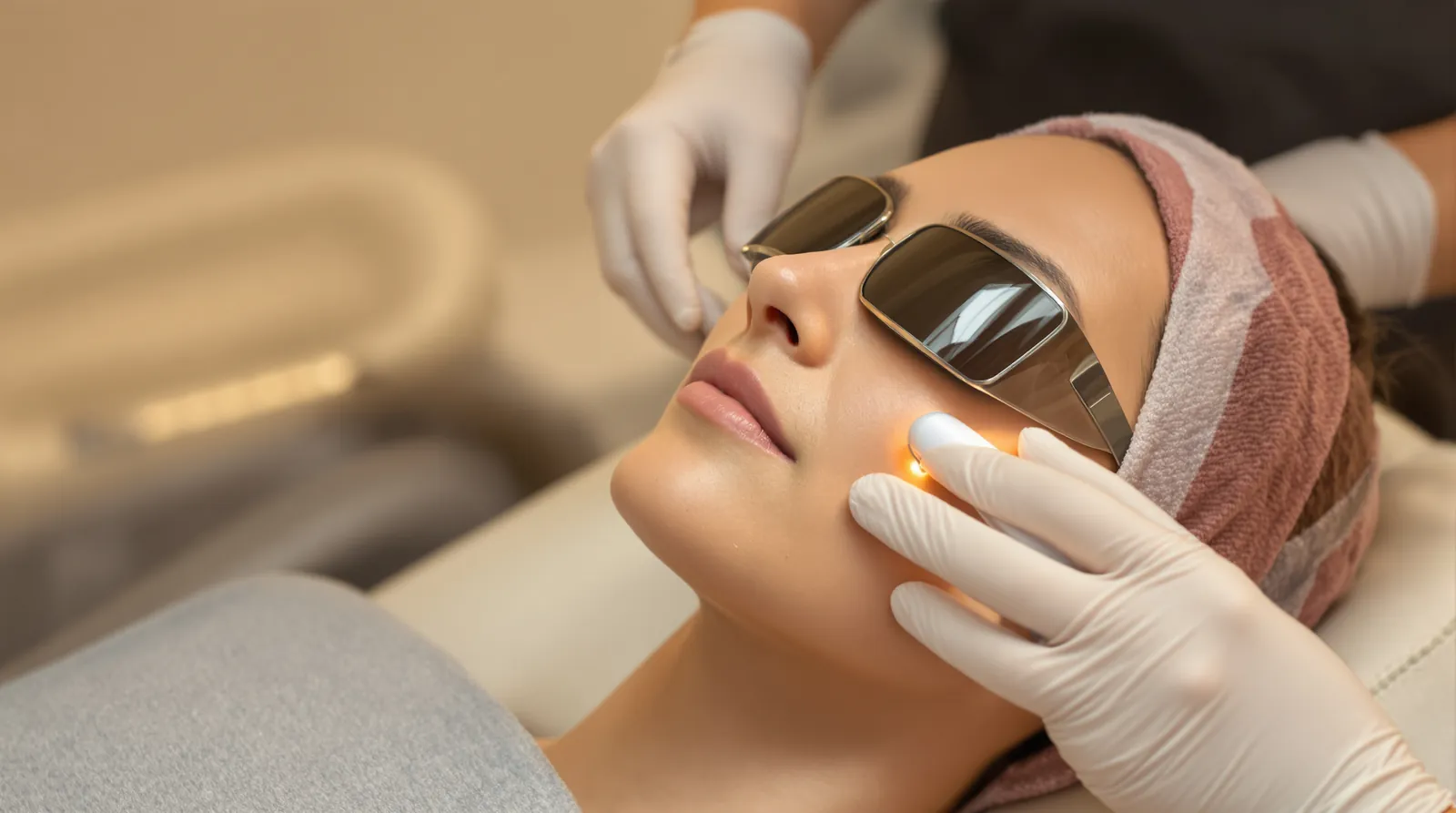
- Laser eye protection for everyone; a numbing cream or injection may be used
- Typical course
- Often 6 to more than 10 sessions, spaced 6 to 8 weeks apart
- Downtime
- Pinpoint bleeding, crusting, redness or blisters are common while skin heals
How laser tattoo removal works
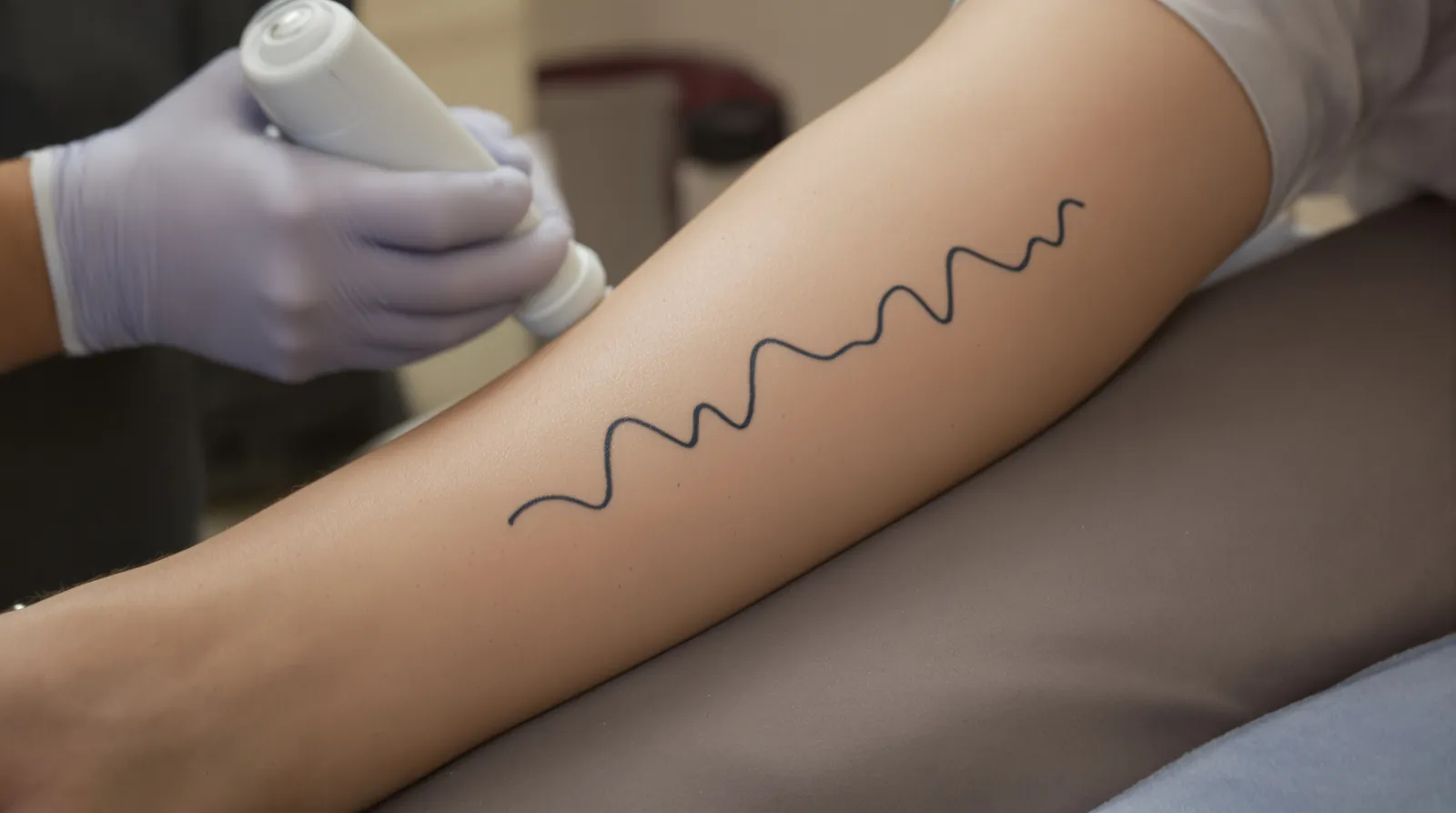
Very short laser pulses heat tattoo ink so quickly that it breaks into tiny particles. Your immune system then clears those particles over the following weeks. Most tattoos fade a little at a time, so treatment takes a series of visits with time to heal in between.
Some people want a tattoo gone. Others want it lighter so a new design can cover it. Tell us your goal at your consultation.
Our tattoo-removal lasers
- Spectra laser (Q-switched Nd:YAG). FDA-cleared for dark inks (black, blue and brown) at 1064 nm and, with its 532-nm and dye handpieces, for lighter inks such as red, tan, purple, orange, sky blue and green.
- PicoCare® Majesty (picosecond Nd:YAG). FDA-cleared for black, brown, green, blue and purple inks at 1064 nm on all skin types, and for red, yellow and orange inks at 532 nm on skin types I to III.
A systematic review found only limited evidence that picosecond lasers remove tattoos better than Q-switched lasers. The laser and settings are chosen for your ink colors and skin type.
Different lights, different targets
- Pigment & vessels
- Hair & deeper pigment
- Water — resurfacing
- 532 nm (KTP / Nd:YAG) — hemoglobin in small vessels and surface pigment
- 530–1100 nm (IPL, filtered broadband light) — sun spots and redness
- 755 nm (alexandrite) — melanin in hair follicles
- 1064 nm (Nd:YAG, including picosecond) — deeper pigment, dark tattoo ink, hair in darker skin
- 2940 nm (erbium) and 10,600 nm (CO₂) — water in skin, for resurfacing
How many sessions will it take?
The American Society for Laser Medicine and Surgery (ASLMS) says six to more than ten treatments may be needed, spaced 6 to 8 weeks apart, and some tattoos never fully clear. In one clinic’s review of 100 patients, satisfactory removal took about 10 sessions on average, ranging from 3 to 20. That review linked the number of sessions to six factors:
- skin type
- location, with the head and neck needing the fewest sessions and hands and feet the most
- ink colors
- amount of ink
- scarring
- layered ink, such as a cover-up tattoo
Why some colors are harder
According to the FDA, black and dark blue are the easiest colors to remove, while green, red and yellow are the hardest. Flesh-toned and white inks and cosmetic tattoos, such as tattooed eyebrows or lip liner, can turn black when treated with a laser. The ASLMS adds that white, pink, red, tan and light brown inks can darken, and that scarring hidden under the ink may show once the ink fades.
What to expect at our Torrance office
Consultation
We look at your tattoo’s colors, size and location, review your skin type and health history, and talk through your goal.
Numbing
A numbing cream applied beforehand or a numbing injection may be used.
Treatment
Everyone in the room wears laser eye protection. Pinpoint bleeding, crusting, redness and blistering are common afterward.
Aftercare
Keep the area clean and moist with ointment, don’t scrub it, and avoid direct sun. Once it heals, use SPF 30+ daily.
Side effects & risks
- Lighter or darker skin where the tattoo was.
- Scarring, including a raised or thick scar that may appear 3 to 6 months after removal.
- Infection, pinpoint bleeding, redness and soreness.
- Ink that turns darker and may not clear.
- Allergic reactions, which are rare but can affect the whole body.
Results vary, and some tattoos never fully clear.
Who should not have it, or should talk to Dr. Shin first
- You have darker skin. The ASLMS advises longer-wavelength lasers for darker skin, and the 532-nm clearance for red, yellow and orange inks covers skin types I to III.
- You have had an allergic reaction to a tattoo.
- You tend to form raised scars.
- You are pregnant. A review advises delaying elective cosmetic procedures until after the baby is born.
- You take, or recently took, isotretinoin.
- You want a cosmetic tattoo removed, such as eyebrows, eyeliner or lip liner. The ink can darken, and the eye area needs special protection.
The FDA notes these lasers are cleared for use by, or under the supervision of, a health care professional. Treatment may be performed by Dr. Shin or by a licensed registered nurse or physician assistant under his supervision.
Common questions
Can tattoos be 100% removed?
Not always. Many tattoos can be greatly lightened, but the ASLMS notes that some people never achieve full clearance. Ink colors, the amount of ink, scarring and layered tattoos all affect the outcome. Setting a realistic goal at the start, whether that is removal or fading enough for a cover-up, helps you plan.
What tattoos are hardest to remove?
According to the FDA, green, red and yellow inks are the hardest colors to remove, and black and dark blue are the easiest. White and flesh-toned inks and cosmetic tattoos can turn black when lasered. Tattoos with a lot of ink, layers or scarring, and tattoos on the hands and feet, tend to need more sessions.
How long does tattoo removal take?
Usually many months, and sometimes more than a year. The ASLMS says six to more than ten treatments may be needed, spaced 6 to 8 weeks apart, to give the skin time to heal and your body time to clear the ink. Your skin type, the tattoo’s location, colors, amount of ink and any scarring all affect the timeline.
Do tattoo removal leave scars?
They can. The FDA lists scarring among the risks of laser tattoo removal, and the American Society for Dermatologic Surgery notes that a raised or thickened scar may appear 3 to 6 months after removal. Scarring from the original tattoo can also show as the ink fades. Follow your aftercare instructions, including not scrubbing the area.
How painful is tattoo removal really?
Discomfort varies from person to person. To make treatment more comfortable, a numbing cream applied beforehand or a numbing injection may be used, according to the ASLMS and the American Society for Dermatologic Surgery. Afterward, the area can be sore and red, and pinpoint bleeding, crusting and blistering are common.
Will insurance cover tattoo removal?
Usually not. Tattoo removal for cosmetic reasons is generally not covered by health insurance. We explain costs before treatment, and if you are paying yourself, you can ask for a Good Faith Estimate. If you think there is a medical reason for removal, check with your health plan first.
Important information
- Our tattoo-removal lasers are FDA-cleared for specific ink colors and skin types. The FDA has not approved tattoo removal creams or do-it-yourself kits.
Sources & further reading
- Tattoo removal: options and results (opens in a new tab) — U.S. Food & Drug Administration
- Tattoo removal (opens in a new tab) — American Society for Laser Medicine and Surgery
- Laser therapy for unwanted tattoo (opens in a new tab) — American Society for Dermatologic Surgery
- The Kirby-Desai scale: a proposed scale to assess tattoo-removal treatments (Kirby et al., 2009) (opens in a new tab) — Journal of Clinical and Aesthetic Dermatology, via PubMed
- Picosecond lasers for tattoo removal: a systematic review (Reiter et al., 2016) (opens in a new tab) — Lasers in Medical Science, via PubMed
- 510(k) K113588: SPECTRA Laser System (opens in a new tab) — U.S. Food & Drug Administration
- 510(k) K080248: Spectra VRM III Laser System (opens in a new tab) — U.S. Food & Drug Administration
- 510(k) K241144: PicoCare Majesty picosecond Nd:YAG laser (opens in a new tab) — U.S. Food & Drug Administration
- The role of lasers and intense pulsed light technology in dermatology (Husain & Alster, 2016) (opens in a new tab) — Clinical, Cosmetic and Investigational Dermatology, via PubMed
- Safety of cosmetic dermatologic procedures during pregnancy (Lee et al., 2013) (opens in a new tab) — Dermatologic Surgery, via PubMed
- Ocular injury in cosmetic laser treatments of the face (Huang et al., 2018) (opens in a new tab) — Journal of Clinical and Aesthetic Dermatology, via PubMed
- Allergic reactions to tattoo pigment after laser treatment (Ashinoff et al., 1995) (opens in a new tab) — Dermatologic Surgery, via PubMed
Last updated October 2026. This page is educational and does not replace a visit with a clinician.