- Treatment areas
- Frown lines, crow’s feet, forehead lines and vertical neck bands
- Starts working
- Usually 1 to 2 days after injection, building over the first week
- How long it lasts
- About 3 to 4 months for frown lines, sometimes longer
- Downtime
- Most people return to everyday activities the same day
- Age
- Adults only; not recommended for anyone under 18
What is Botox® Cosmetic?
Botox® Cosmetic (onabotulinumtoxinA) is a prescription medicine made by Allergan Aesthetics, an AbbVie company. Tiny doses are injected into specific muscles to relax them for a few months. When those muscles relax, certain lines on the face and neck look smoother.
Botox Cosmetic does not add volume or tighten loose skin. If lost volume is your main concern, hyaluronic acid fillers may be worth discussing.
What Botox® Cosmetic treats
Botox Cosmetic is FDA-approved to temporarily improve the look of moderate to severe lines in adults in four areas:
- Frown lines between the eyebrows (approved in 2002)
- Crow’s feet at the outer corners of the eyes (2013)
- Forehead lines, treated together with frown lines (2017)
- Vertical neck bands, called platysma bands (2024)
This page covers only these approved uses. Botox Cosmetic is not approved to prevent lines or to lift sagging skin.
Other uses of Botox®
A separate product, Botox® (without “Cosmetic” in its name), is FDA-approved for several medical conditions. Examples include helping prevent headaches in adults with chronic migraine and treating severe underarm sweating that products applied to the skin do not control. These medical uses need their own evaluation and are not part of a cosmetic visit.
What to expect at your visit in Torrance
Medical exam
Your health history and medicines are reviewed. The muscles that cause your lines are checked while you frown, squint or raise your eyebrows.
Plan and consent
You learn the expected benefits, risks and other options before deciding. Your dose is set at your exam; the FDA label lists standard doses, such as 20 units for frown lines.
Injections
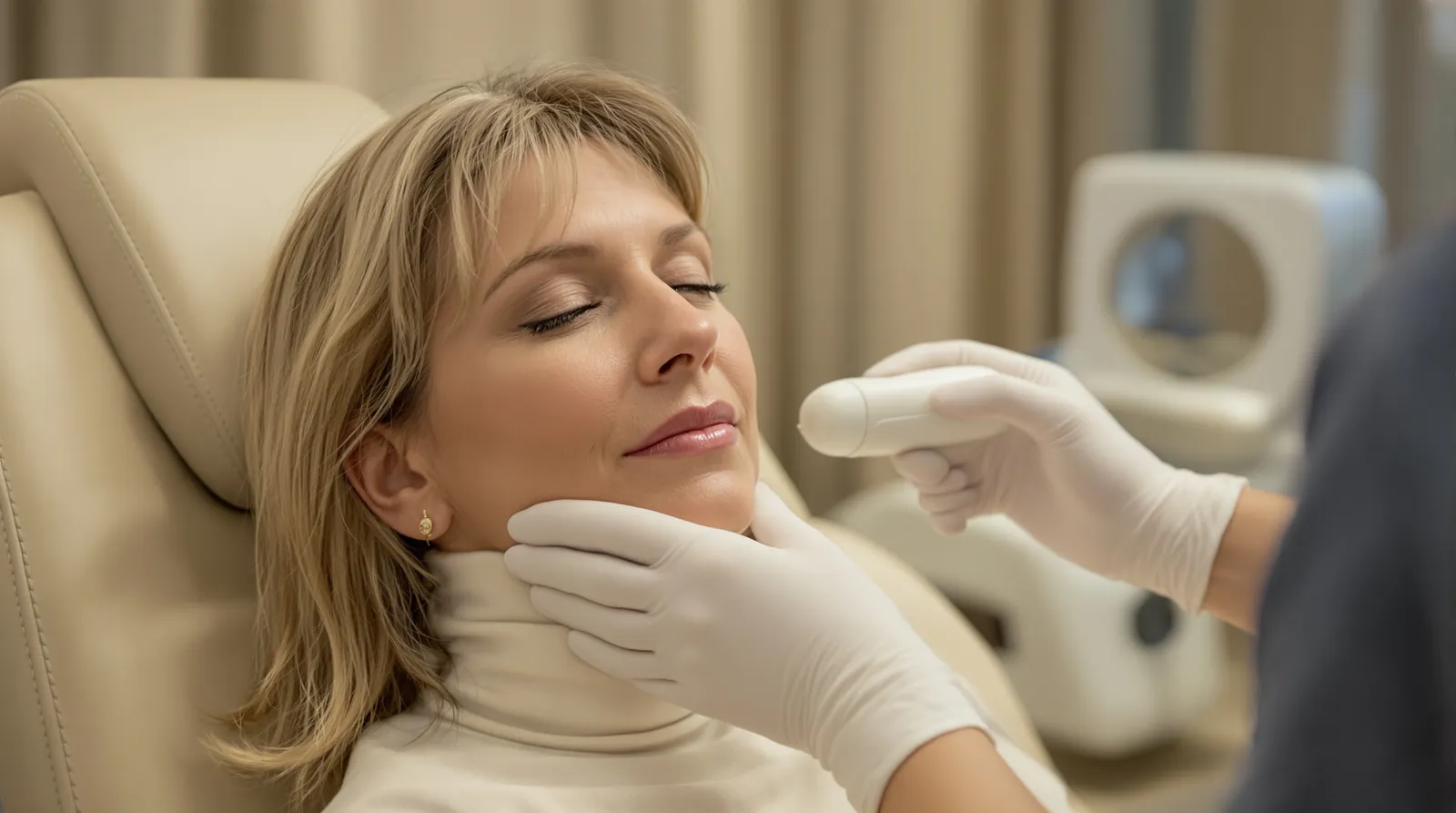
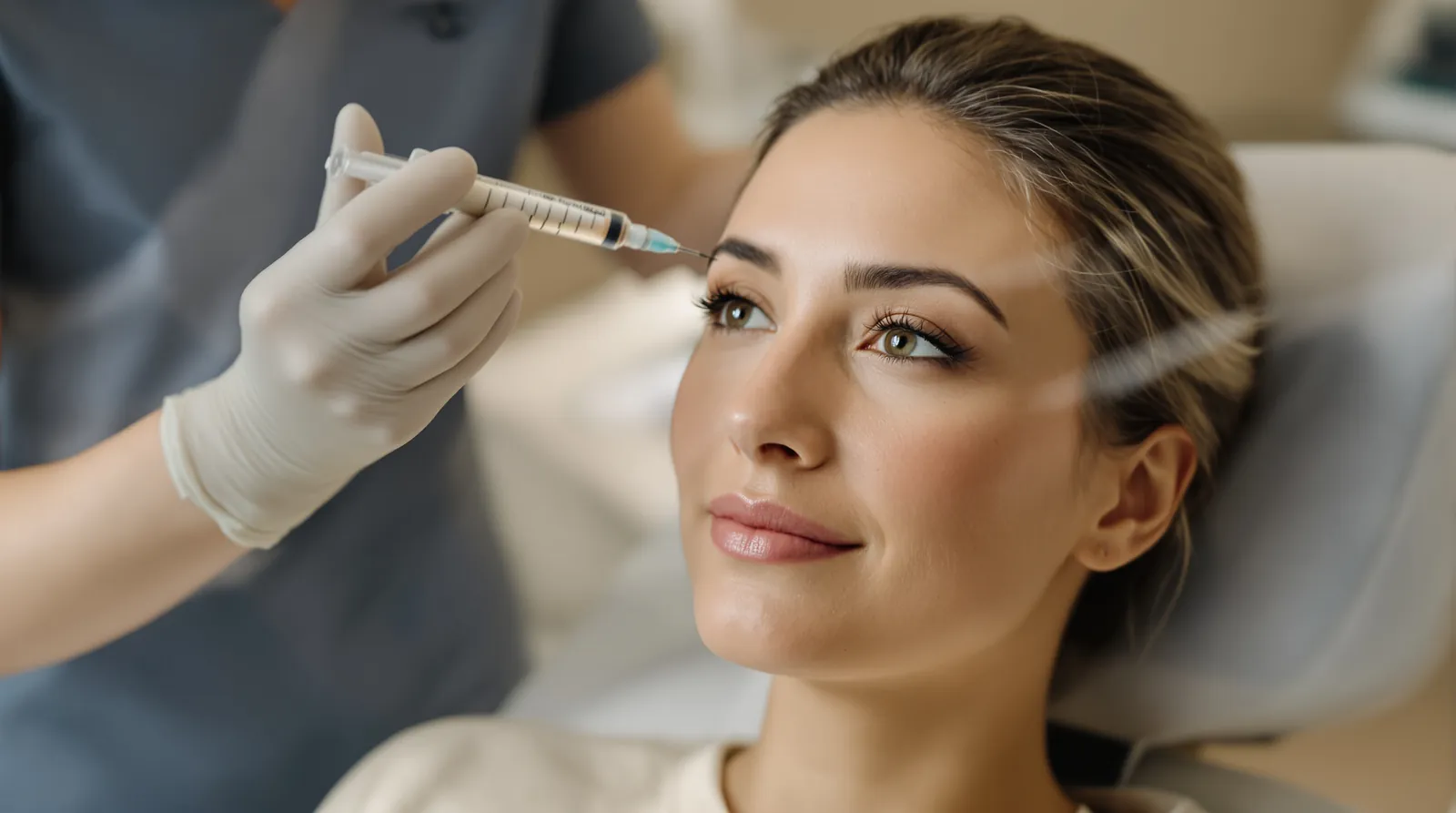
Small amounts are injected into the chosen muscles with a very fine needle. Ice or a numbing cream may be offered for comfort.
Aftercare
You receive aftercare instructions. Most people return to everyday activities the same day.
When will I see results, and how long do they last?
The FDA label says the treated muscles usually begin to relax 1 to 2 days after injection, and the effect grows during the first week.
For frown lines, the effect lasts about 3 to 4 months, and sometimes longer. Results vary from person to person and are temporary. Treatment more often than every 3 months has not been studied.
The typical timeline at a glance
- Treatment day — a few tiny injections; most people return to normal activities the same day.
- 1–2 days — treated muscles usually begin to relax.
- About 3–4 months — results for frown lines typically fade (sometimes longer).
- Every 3 months or more — treating more often has not been studied.
Side effects and risks
Soreness, swelling, redness or bruising can appear where the needle went in. A bruise usually fades in about a week.
In the FDA studies, the most common side effects were:
- Frown lines: a drooping eyelid (3 out of 100 people)
- Crow’s feet: eyelid swelling (1 out of 100)
- Forehead lines: headache (9 out of 100) and a drooping brow (2 out of 100)
Dry eyes and allergic reactions can also happen. Serious side effects, some fatal, have been reported when Botox was used for purposes that are not FDA-approved.
Who should not have it, or should talk to Dr. Shin first
Do not have Botox Cosmetic if you are allergic to any botulinum toxin product or its ingredients, or have a skin infection where it would be injected.
Tell Dr. Shin before treatment if you:
- have ALS, myasthenia gravis, Lambert-Eaton syndrome or another muscle or nerve disease
- have breathing problems such as asthma or emphysema, trouble swallowing, or a bleeding problem
- have had or plan to have surgery on your face, or have drooping eyelids or weak forehead muscles
- are pregnant, plan to become pregnant, or are breastfeeding
- had any botulinum toxin injection in the last 4 months, or recently had an antibiotic by injection
- take muscle relaxants, allergy or cold medicine, sleep medicine, aspirin-like products or blood thinners
Botox Cosmetic is not recommended for anyone younger than 18.
Common questions
How long does one shot of Botox last?
For frown lines, the effect lasts about 3 to 4 months, and sometimes longer, according to the FDA label and the American Academy of Dermatology. A treatment visit usually includes several small injections. Results vary from person to person and are temporary.
What is the 4-hour rule for Botox?
The “4-hour rule” is common injector advice: stay upright and don’t press on or rub the treated area for about 4 hours. It is not an FDA label instruction. The American Academy of Dermatology does advise against rubbing or massaging injected areas. Follow the written aftercare instructions our team gives you.
What should you avoid after Botox?
The American Academy of Dermatology advises not rubbing or massaging the injected areas, not pressing or rubbing in makeup, and waiting 2 hours before strenuous exercise. The FDA Medication Guide adds: if you notice muscle weakness, vision problems or dizziness in the hours to weeks after treatment, do not drive or do other dangerous activities.
Is Botox 3 times a year too much?
Three treatments a year works out to about one every 4 months. The FDA label says the safety and effectiveness of treatment more often than every 3 months have not been studied. The American Academy of Dermatology notes that another treatment can be given when lines return.
What age is best to start Botox?
There is no single right age. Botox Cosmetic is FDA-approved for adults with moderate to severe lines in four areas and is not recommended for anyone under 18. It is not approved to prevent lines. The right time depends on your lines, health and goals, which Dr. Shin can review at an exam.
Do you age faster after stopping Botox?
Stopping is not known to speed up aging. Botox Cosmetic works only while the treated muscles are relaxed. When it wears off, usually after about 3 to 4 months, movement returns and your lines come back. Natural aging continues whether or not you are treated.
Can Botox lift a sagging face?
No. Botox Cosmetic is FDA-approved to temporarily improve specific lines and vertical neck bands. It does not lift sagging skin or add volume. If sagging is your main concern, Dr. Shin can discuss other options, such as Ultherapy® and HIFU or radiofrequency skin tightening.
Important information
- FDA status: Botox® Cosmetic is FDA-approved for the four adult uses listed on this page. It carries a boxed warning about its effects spreading beyond the injection area, so please read the side effects and risks before you decide.
- Boxed warning: The effects of Botox Cosmetic can spread beyond the injection area. This can cause muscle weakness, double or blurred vision, drooping eyelids, a hoarse voice, or trouble swallowing, speaking or breathing, hours to weeks after treatment. Swallowing and breathing problems can be life-threatening. Get medical help right away if any of these happen.
Sources & further reading
- BOTOX Cosmetic (onabotulinumtoxinA) Prescribing Information and Medication Guide (opens in a new tab) — NIH National Library of Medicine, DailyMed
- BOTOX (onabotulinumtoxinA) Prescribing Information (opens in a new tab) — NIH National Library of Medicine, DailyMed
- Botulinum toxin therapy: FAQs (opens in a new tab) — American Academy of Dermatology
- BOTOX Cosmetic receives FDA approval for moderate to severe platysma bands (opens in a new tab) — AbbVie
- BOTOX Cosmetic celebrates 20 years since first U.S. FDA approval (opens in a new tab) — Allergan Aesthetics
- FDA approves BOTOX Cosmetic for moderate to severe forehead lines (opens in a new tab) — Allergan (via PR Newswire)
Last updated October 2026. This page is educational and does not replace a visit with a clinician.