- Helps with
- Active breakouts and sunken (atrophic) acne scars
- First step
- An exam and a medical plan for active acne
- Typical course
- Acne laser study: 5 sessions, 2 weeks apart. Scar studies: about 3 sessions, 4 weeks apart
- Downtime
- Varies by treatment, up to about 1 to 2 weeks after ablative resurfacing
Active acne: start with a medical plan
Acne is a medical skin condition. According to the National Institutes of Health, doctors treat it with medicines applied to the skin, such as benzoyl peroxide, retinoids, salicylic acid or antibiotics, and with medicines taken by mouth, such as antibiotics, hormone therapy for some women, or isotretinoin. Squeezing or picking pimples can cause scars or dark blotches.
Dr. Shin can examine your skin, review your medicines and health history, and recommend a treatment plan.
In-office options for active acne
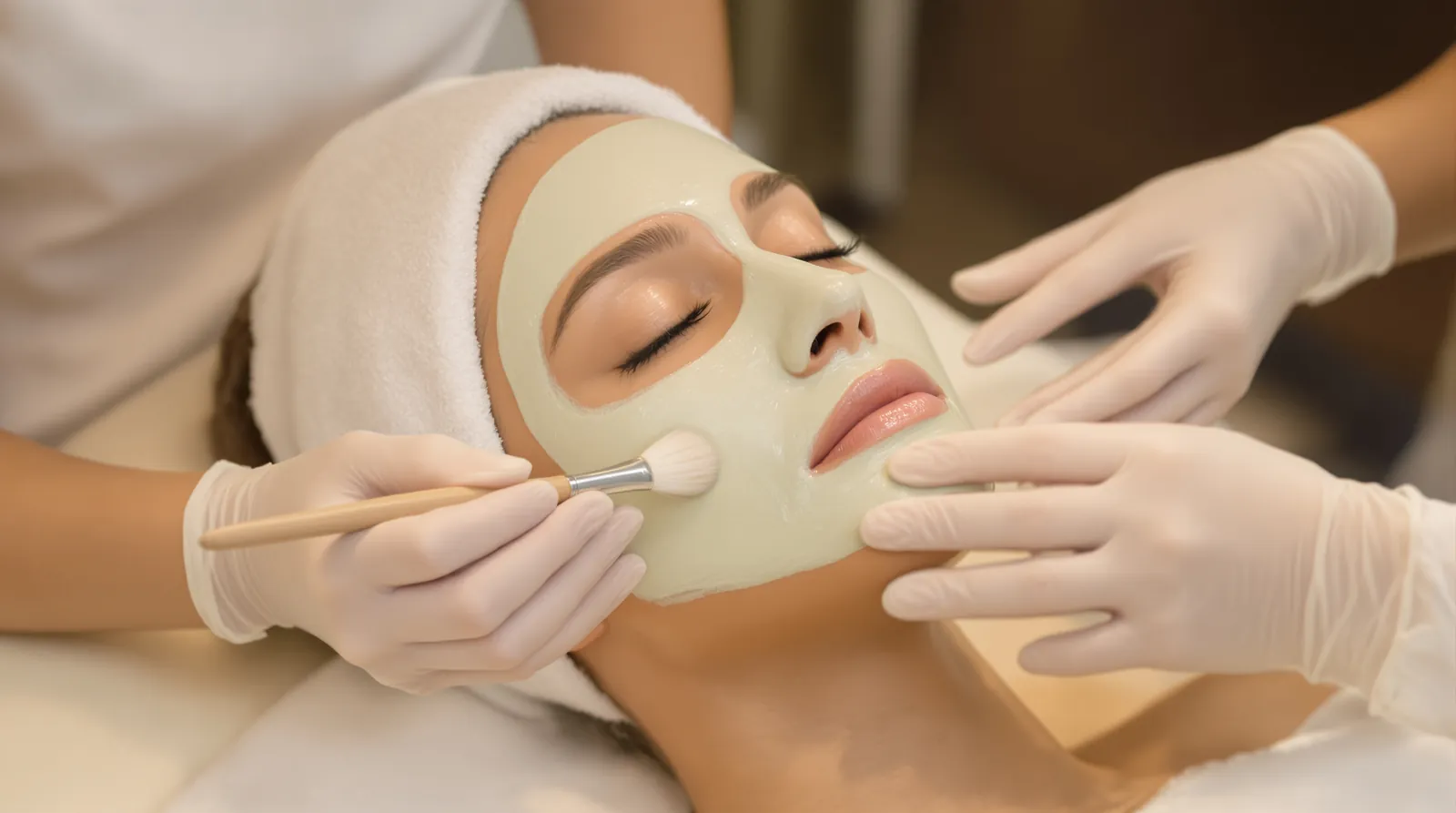
- Acne facial: deep cleansing and extraction of blackheads and whiteheads, to support medical acne care.
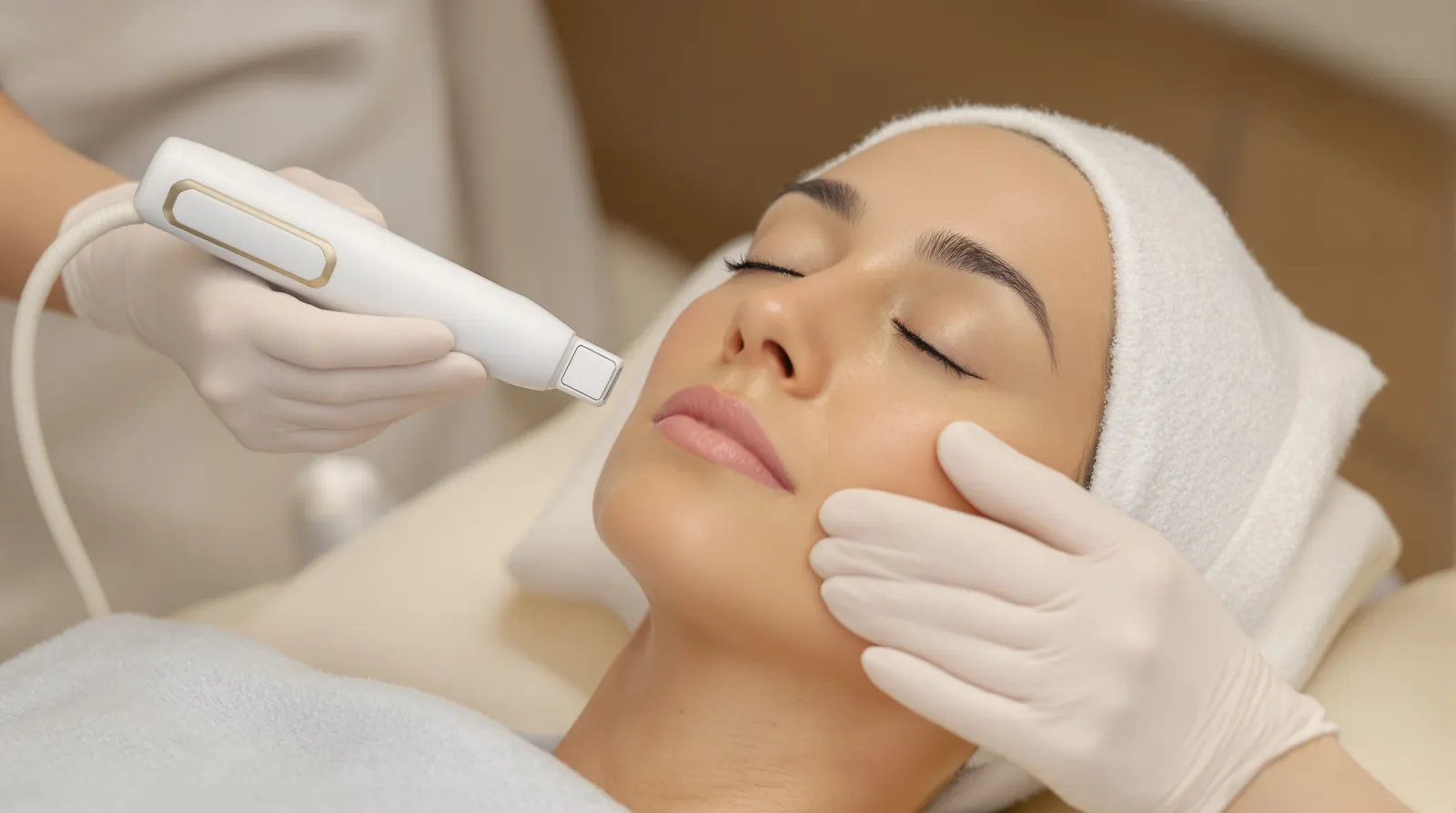
- Aerolase LightPod Neo laser: a 1064-nm laser FDA-cleared for mild-to-moderate inflammatory acne. In a single-center study, people had 5 treatments 2 weeks apart without numbing or skin cooling. Evidence is still limited, and results vary.
More broadly, a Cochrane review found that high-quality evidence for light-based acne treatments is lacking.
Acne scars: your options
| Option | How it works | FDA status for acne scars |
|---|---|---|
| Laser resurfacing (CO2, erbium) | Removes thin layers of skin so new skin forms | Cleared for skin resurfacing; acne scars cleared on certain CO2 models with non-fractional handpieces |
| RF microneedling (Infini) | Fine needles deliver heat into the skin | Off-label (cleared for facial wrinkles) |
| Bellafill® | A filler placed under sunken scars | FDA-approved for certain moderate to severe sunken acne scars on the cheeks in adults over 21 |
| PicoCare® Majesty micro-lens handpiece | Splits laser light into many tiny beams | Off-label (cleared for tattoos and benign brown spots) |
A 2025 systematic review found ablative lasers such as CO2 and erbium improved sunken scars more than non-ablative lasers, with more pain and downtime, usually over about three sessions four weeks apart. A meta-analysis found fractional picosecond lasers improved acne scars about as much as other fractional lasers, with less darkening afterward. Scars usually improve rather than disappear.
What to expect at our Torrance office
Exam
Dr. Shin looks at your breakouts or scars and reviews your medicines, including any isotretinoin, and your health history.
Plan
Many scar treatments are not done over active breakouts, so acne is usually treated first. Scar options are matched to your scar and skin type.
Treatment
Everyone in the room wears eye protection for laser treatments. Numbing may be used for scar procedures.
Follow-up
Scar treatment is usually a series of sessions. Protect treated skin from the sun.
Side effects & risks
- Laser treatments: redness, swelling, blisters, darker or lighter patches, and eye injury without eye protection. Darker skin is more prone to dark marks.
- Ablative resurfacing: about 1 to 2 weeks of healing, small white bumps (milia), cold sore flares, infection and, rarely, scarring.
- RF microneedling: infection, scarring and long-lasting discoloration. The FDA has received reports of serious injuries, including burns, scarring, fat loss, disfigurement and nerve damage.
- Bellafill®: see the Bellafill page for its risks and the skin test required before treatment.
Who should not have it, or should talk to Dr. Shin first
- You take, or recently took, isotretinoin. A 2017 expert panel advised against fully ablative laser during treatment, and the AAD says at least one month should pass after your last pill before microneedling.
- You have painful, deep or pus-filled pimples where scars would be treated.
- You have had a keloid, a raised and thickened scar.
- You are pregnant. A review advises delaying elective cosmetic procedures until after the baby is born.
- You have a tan or a darker skin tone, or you get cold sores.
Laser treatment may be performed by Dr. Shin or by a licensed registered nurse or physician assistant under his supervision.
Common questions
Can lasers treat active acne?
Some lasers can help. The Aerolase LightPod Neo is FDA-cleared for mild-to-moderate inflammatory acne, and a single-center study found fewer acne lesions after 5 treatments spaced 2 weeks apart. A Cochrane review found high-quality evidence for light-based acne treatments is lacking, so we treat lasers as an add-on to medical acne care, not a replacement.
Will acne scars go away completely?
Usually not, but they can often be improved. A 2025 systematic review found ablative lasers improved sunken scars more than non-ablative lasers, and a meta-analysis found fractional picosecond lasers performed about as well as other fractional lasers. Results depend on the type and depth of your scars, and most people need a series of treatments.
Do I need to stop isotretinoin before acne scar treatment?
Not always, but tell us. A 2017 expert panel found no good evidence for routinely delaying fractional laser procedures during or after isotretinoin, but it advised against fully ablative laser during treatment. The AAD says at least one month should pass after your last pill before microneedling. Dr. Shin will help you decide the timing.
Which acne scar treatment is right for me?
It depends on your scar type, skin type, health history and how much downtime you can manage. Ablative resurfacing takes about 1 to 2 weeks to heal, while other options generally need less recovery. Bellafill® is FDA-approved only for certain sunken scars on the cheeks. An exam lets Dr. Shin explain which options fit you.
Important information
- The Aerolase LightPod Neo is FDA-cleared (K120235) for mild-to-moderate inflammatory acne. Bellafill® is FDA-approved for certain acne scars on the cheeks, and CO2 laser treatment of acne scars is cleared only on certain models. RF microneedling and picosecond micro-lens treatment of acne scars are off-label. Dr. Shin will review the evidence, risks and alternatives with you.
Sources & further reading
- Acne: diagnosis, treatment, and steps to take (opens in a new tab) — National Institute of Arthritis and Musculoskeletal and Skin Diseases (NIH)
- 510(k) K120235: Aerolase Nd:YAG laser (LightPod Neo) (opens in a new tab) — U.S. Food & Drug Administration
- Treatment of mild to severe acne vulgaris with a 650-microsecond 1064-nm Nd:YAG laser (Saedi et al., 2024) (opens in a new tab) — Journal of Drugs in Dermatology, via PubMed
- Light therapies for acne (Barbaric et al., 2016) (opens in a new tab) — Cochrane Database of Systematic Reviews, via PubMed
- Ablative and non-ablative laser therapies for atrophic, hypertrophic and keloid scars: a systematic review of comparative trials (Haji Mohammadi et al., 2025) (opens in a new tab) — Lasers in Medical Science, via PubMed
- Fractional picosecond laser for atrophic acne scars: a meta-analysis (Li et al., 2023) (opens in a new tab) — Journal of Cosmetic Dermatology, via PubMed
- Isotretinoin and timing of procedural interventions: consensus recommendations (Spring et al., 2017) (opens in a new tab) — JAMA Dermatology, via PubMed
- Microneedling can fade scars, uneven skin tone, and more (opens in a new tab) — American Academy of Dermatology
- Potential risks with certain uses of radiofrequency (RF) microneedling: FDA safety communication (opens in a new tab) — U.S. Food & Drug Administration
- 510(k) K121481: Lutronic INFINI (opens in a new tab) — U.S. Food & Drug Administration
- PMA P020012: ArteFill / Bellafill (opens in a new tab) — U.S. Food & Drug Administration
- Bellafill receives FDA approval for treatment of acne scars (opens in a new tab) — Suneva Medical, via PR Newswire
- 510(k) K100610: eCO2 Plus Laser System (opens in a new tab) — U.S. Food & Drug Administration
- Laser skin resurfacing (opens in a new tab) — Cleveland Clinic
- Safety of cosmetic dermatologic procedures during pregnancy (Lee et al., 2013) (opens in a new tab) — Dermatologic Surgery, via PubMed
Last updated October 2026. This page is educational and does not replace a visit with a clinician.